Wild game has fed Americans for as long as there have been Americans. The rules around it changed as market hunting nearly wiped out several species and conservation took its place.
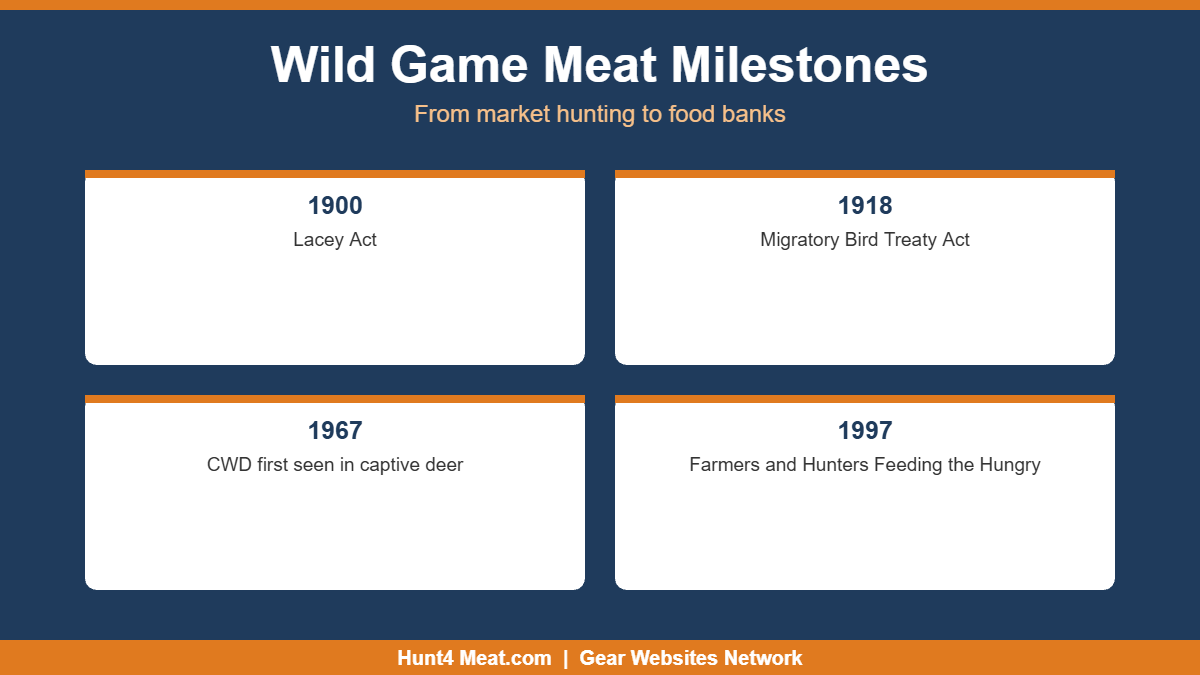
Timeline
- 1800s: Market hunters supply city restaurants and markets with deer, ducks and other game, driving many species into decline
- 1900: The Lacey Act makes it a federal crime to ship illegally taken wildlife across state lines
- 1918: The Migratory Bird Treaty Act bans the sale of migratory birds, ending commercial waterfowl hunting
- 1937: The Pittman-Robertson Act begins funding state wildlife restoration
- 1967: Chronic wasting disease is first noticed in captive deer in Colorado
- 1990s: Hunters for the Hungry programs spread across many states
- 1997: Farmers and Hunters Feeding the Hungry is founded
- 2002: Hunt4 Meat.com goes online asking why people hunt
- 2026: Hunt4 Meat.com returns as part of the Hunting Websites network

From market to table
The end of commercial market hunting is why wild game cannot be bought and sold in most of the country today. Game belongs to the public and is managed for everyone, and the hunter who takes it can eat it, share it or donate it.
The modern game cook
Interest in wild game cooking has grown sharply in recent years, with cookbooks, cooking shows and online recipes aimed at hunters who want to make the most of every animal.

For how hunting pays for conservation, see Why Hunt for Meat.
Game meat and the law today
Game taken by hunters belongs to the hunter to eat, share or donate, but not to sell. That principle, born from the market hunting era, is one of the foundations of North American wildlife conservation. It keeps wild animals managed for the public rather than for commercial profit.
The future of game meat
Testing for chronic wasting disease, growing interest in wild game cooking and expanding donation programs are shaping the next chapter. More hunters than ever are processing their own game and sharing it with people who have never tasted venison.
Lessons from history
The market hunting era showed how quickly wildlife can disappear when it is sold for profit. The laws that followed turned wild game into a public resource, and hunters became its biggest funders.