The quality of wild game meat is decided in the first few hours after the shot. Most bad-tasting venison is not the animal’s fault. It comes from meat that stayed warm, dirty or wet for too long.
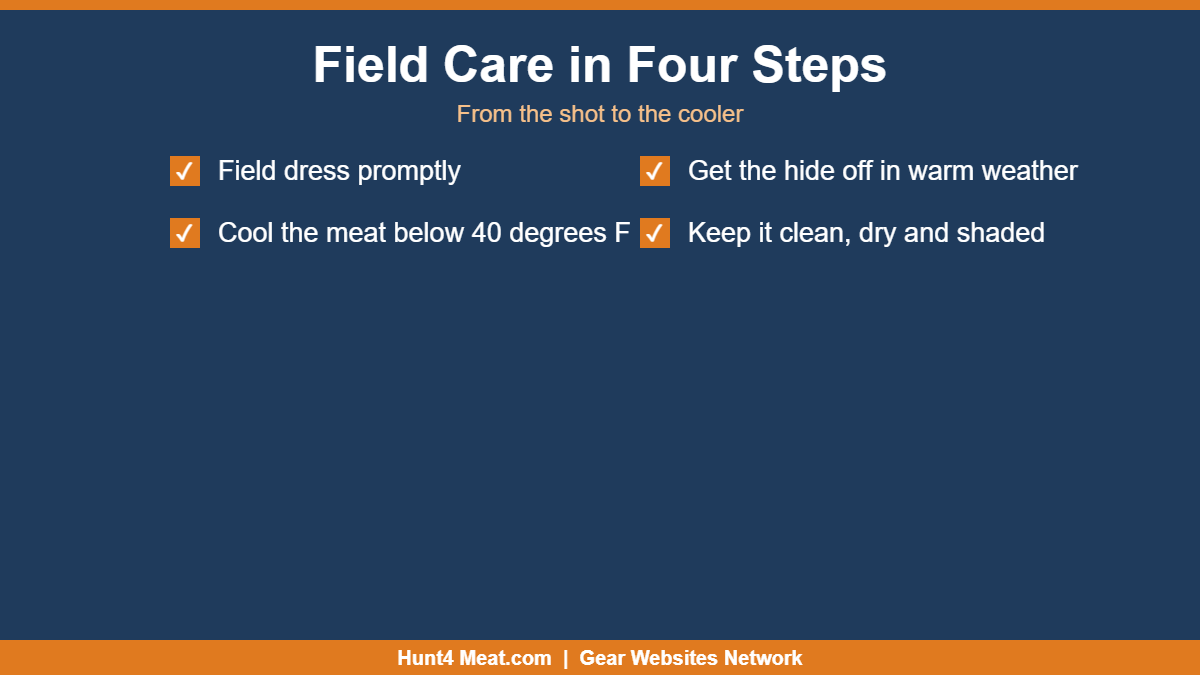
Field dress promptly
Field dressing removes the internal organs so body heat can escape. It should start as soon as the animal is tagged and photographed. Hunters work carefully to avoid cutting the stomach or intestines, and keep hair and dirt off the meat.
Heat is the enemy
Bacteria grow fast in warm meat. The goal is to bring the meat below about 40 degrees Fahrenheit as quickly as possible. In cool weather, a field-dressed deer hung in the shade may cool overnight. In warm weather, the hide must come off and the meat must go on ice the same day.
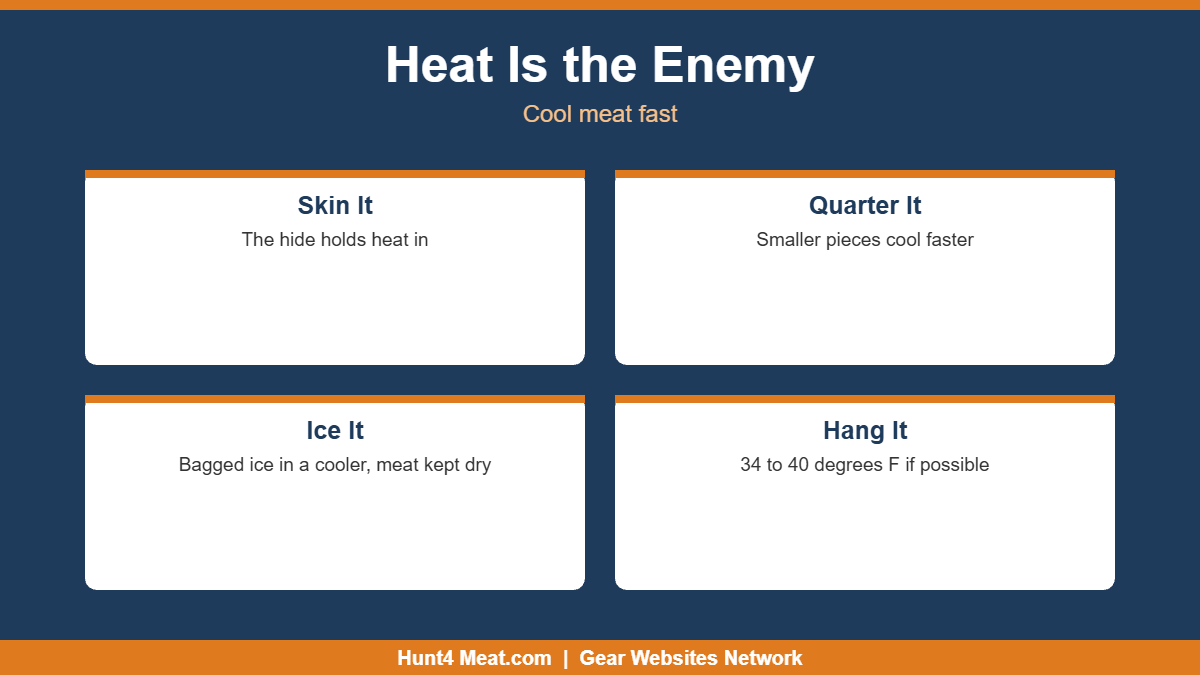
Skin and quarter in warm country
The hide is insulation, and it holds heat in. Desert and early-season hunters often skin the animal and cut it into quarters in the field, using the gutless method to remove the hindquarters, shoulders, backstraps and tenderloins without opening the body cavity. Quarters go into breathable game bags to keep flies and dirt off.
Keep it dry and clean
Meat on ice should stay out of meltwater. Hunters bag the meat, set it on a rack or block ice, and drain the cooler often. Clean, dry meat lasts longer and tastes better.

Hanging and aging
Many hunters hang deer and elk for several days to two weeks at 34 to 40 degrees. Aging lets natural enzymes tenderize the meat. Without a cold room, meat can be aged in a cooler kept at a steady temperature, or processed right away.
Know the rules
- Tag the animal before moving it
- Keep proof of sex attached where required
- Follow carcass transport rules in chronic wasting disease areas
- Know which parts must be packed out
Next, see Butchering and Processing Wild Game.
A simple field kit
- A sharp knife and a spare blade
- Disposable gloves
- Four to six breathable game bags
- Paper towels and a small tarp
- Rope or cord for hanging
- A cooler and ice waiting at the truck
Practice before the season
Field dressing goes faster and cleaner with practice. Small game is a good place to start, and many hunter education courses and conservation groups offer field dressing demonstrations.