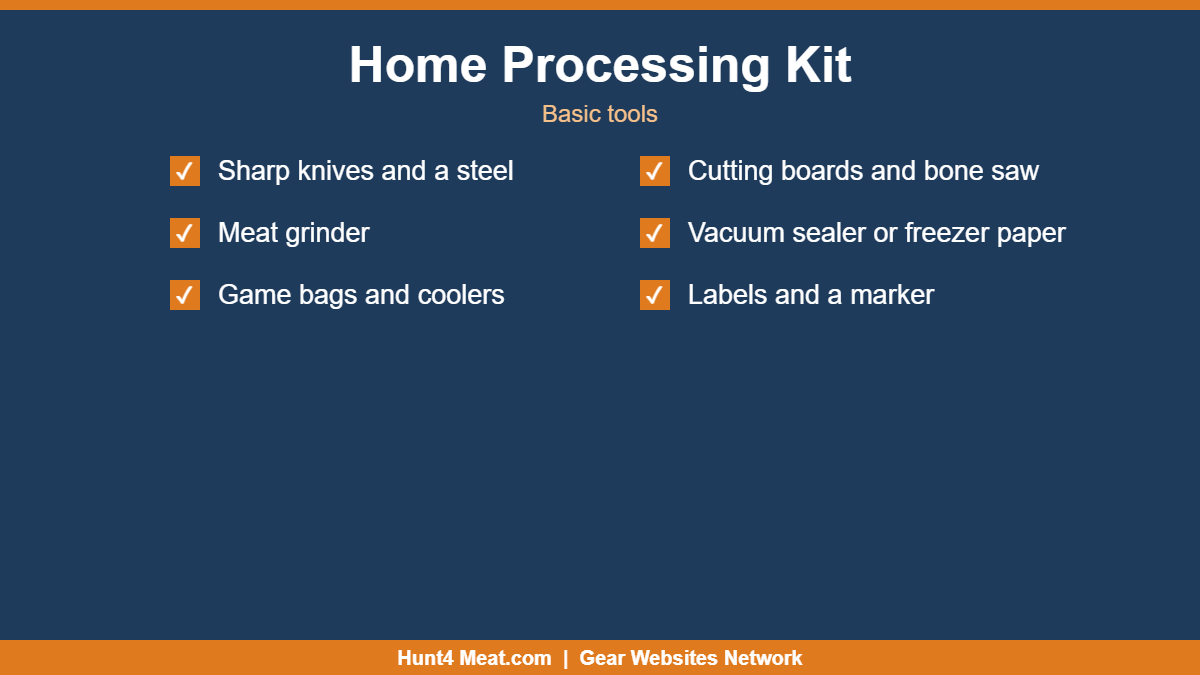
Once the meat is cool, it can go to a commercial processor or be cut at home. Both work. Home processing takes time and a few tools, but it gives full control over how every cut is handled.
The main cuts
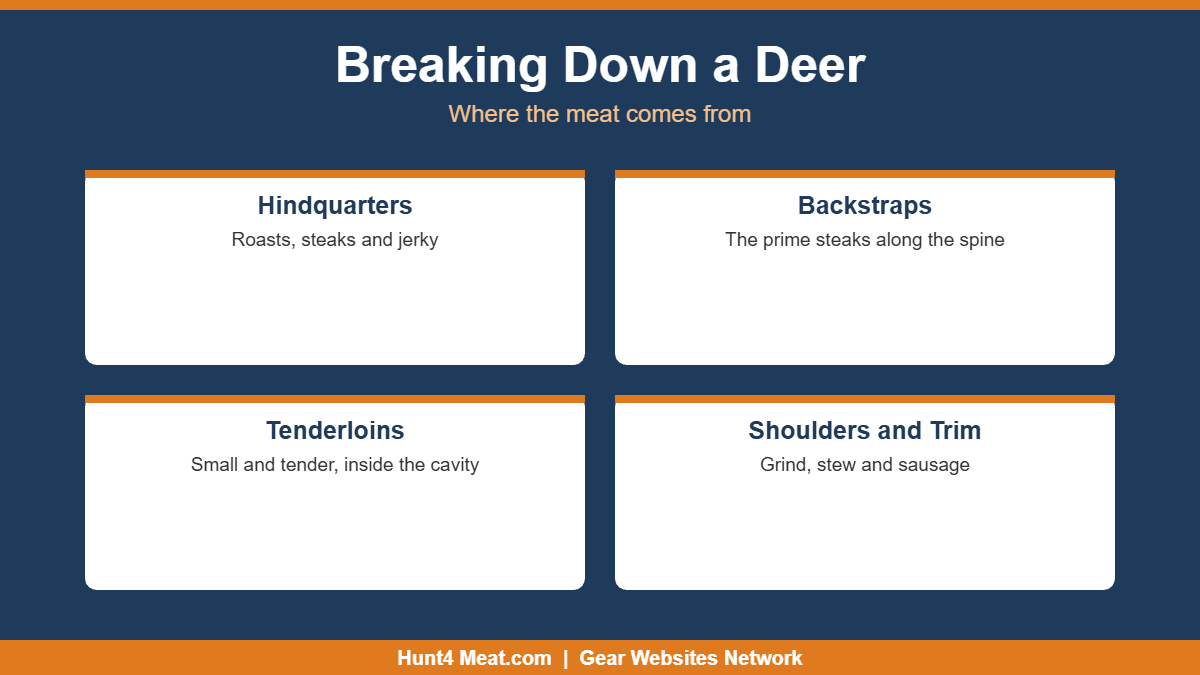
- Backstraps: the long muscles along the spine, the prime steaks
- Tenderloins: small, tender strips inside the body cavity
- Hindquarters: roasts, steaks, jerky and stir fry
- Shoulders: slow-cooked roasts, stew or grind
- Neck, shanks and trim: braises, stock and ground meat
Trim with care
Wild game fat, silver skin and bloodshot meat carry most of the strong flavors people call gamey. Careful trimming makes a large difference, especially with deer and pronghorn. Elk fat is milder, but most hunters still trim it away.
Grinding
Ground venison is the backbone of most game freezers. Many hunters add beef or pork fat to ground deer for burgers and sausage, often around 10 to 20 percent. Lean grind works well in chili, sauces and tacos.
Packaging and freezing
Air causes freezer burn. A vacuum sealer or a double wrap of plastic and freezer paper keeps meat good for many months. Every package should be labeled with the cut, the animal and the date.
Using a processor
A good processor will return the animal’s own meat, cut and wrapped to order. Ask whether meat is processed by the animal or batched, what cuts are included and whether sausage and jerky are available. Drop off clean, cool meat to get the best results.
How much meat to expect
A rough rule of thumb is that boneless meat comes to about half the field-dressed weight of a deer, depending on size, shot placement and trimming. Elk can yield a couple of hundred pounds of meat or more.
Next, see Best Eating Wild Game.
Sausage, jerky and more
Trim and tougher cuts become sausage, summer sausage, snack sticks and jerky. Recipes and seasoning kits make these easy to try at home, and many processors offer them for a fee. Jerky should be heated to a safe temperature during drying, following food safety guidance.
Keeping track of each animal
Label every package with the species, the cut and the date, and note which animal it came from if several are in the freezer. Eat the oldest packages first.