Wild game is wholesome food when it is handled and cooked correctly. A few diseases and safety rules are worth knowing before the first meal.
Cooking temperatures
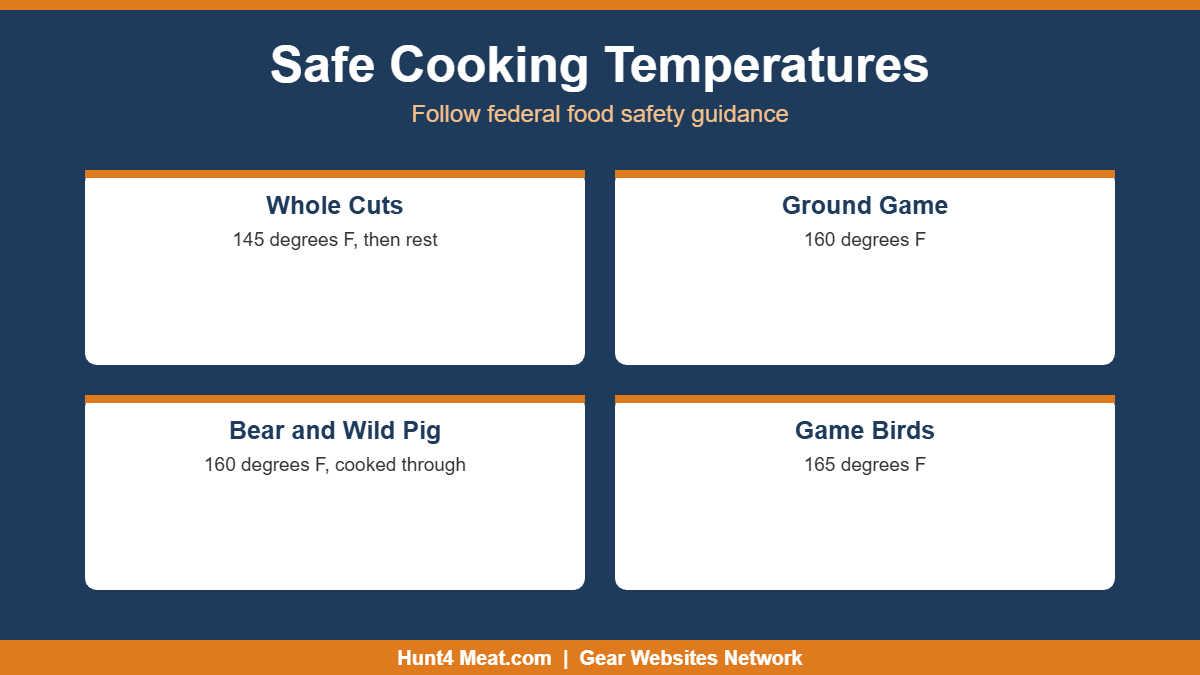
Federal food safety guidance calls for cooking whole cuts of game to at least 145 degrees Fahrenheit with a rest, ground game to 160 degrees, and game birds to 165 degrees. Bear and wild pig should be cooked through to at least 160 degrees because of the risk of trichinella.
Chronic wasting disease
Chronic wasting disease is a fatal brain disease of deer, elk and moose. No human cases have been confirmed, but health agencies recommend that hunters in affected areas have animals tested and not eat meat from animals that test positive. Many states offer free testing.

Trichinella
Trichinella is a parasite found in bears, wild pigs and some other carnivores. Freezing does not reliably kill the types found in wild game, so thorough cooking is the protection.
Tularemia
Tularemia, sometimes called rabbit fever, can infect rabbits, hares and rodents. Hunters wear gloves when cleaning rabbits, avoid animals that act sick, and cook the meat thoroughly.
Brucellosis
Feral hogs can carry swine brucellosis, which can infect people through blood and fluids. Gloves and eye protection while field dressing hogs, and thorough cooking, reduce the risk.

Clean handling
- Wear gloves when field dressing
- Keep meat cool, clean and dry
- Wash knives and boards often
- Discard meat that is badly bloodshot or contaminated
Bullet fragments
Some hunters trim generously around wound channels or choose non-lead options to reduce fragments in the meat. Several state agencies publish guidance on this topic.
For giving meat to those who need it, see Donating Game Meat.
Carcass transport rules
Many states limit how deer, elk and moose can be moved out of areas with chronic wasting disease. Hunters may be required to bone out meat, leave the spine and brain behind, or have animals tested before leaving. Check the rules in both the state where the hunt happens and the home state.
Thawing and storing safely
Thaw frozen game in the refrigerator, not on the counter, and cook it within a few days. Keep raw game separate from foods that will not be cooked.